‘Getting information of the Internet is like taking a drink from a fire hydrant’
Th way of how we organise the world is known as an ontology. A basic example of an ontology would be would be a main category separated into a list of subcategories. This could be found in a library for example and has limitations. For example, some categories have a lot of information on one thing but can disregard other, just as important, categories.

However, a networked ontology is much wider and doesn’t have categories, but is grouped information connecting to each other. In this type of ontology there is a lot more irrelevant information; Spam. It can therefore be a lot harder to find relevant information is a sea of spam. An example of this type of ontology would be the Internet, hence the quote at the start of this blog.

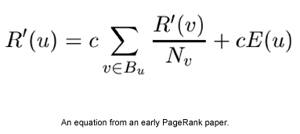
A way that Google specifies the information for each person is a piece of algebra called PageRan<. This narrows the spam information in order to make specific information more relevant for the searcher. For example, cookies are used to gain user information which can be used to narrow the search. The other day I was looking for a new laptop online only to find a plethora of laptop advertisements on my social media like Instagram and Facebook.
Overall, filters for information have their affordances and constraints. It allows information to be user specific. However, it allows assists the spreading of fake news online. It therefore means that no filter will ever be able to filter out all fake news, however PageRan<, is a filter that is very good at filtering fake news and can only get better at it.
 Language and New Media